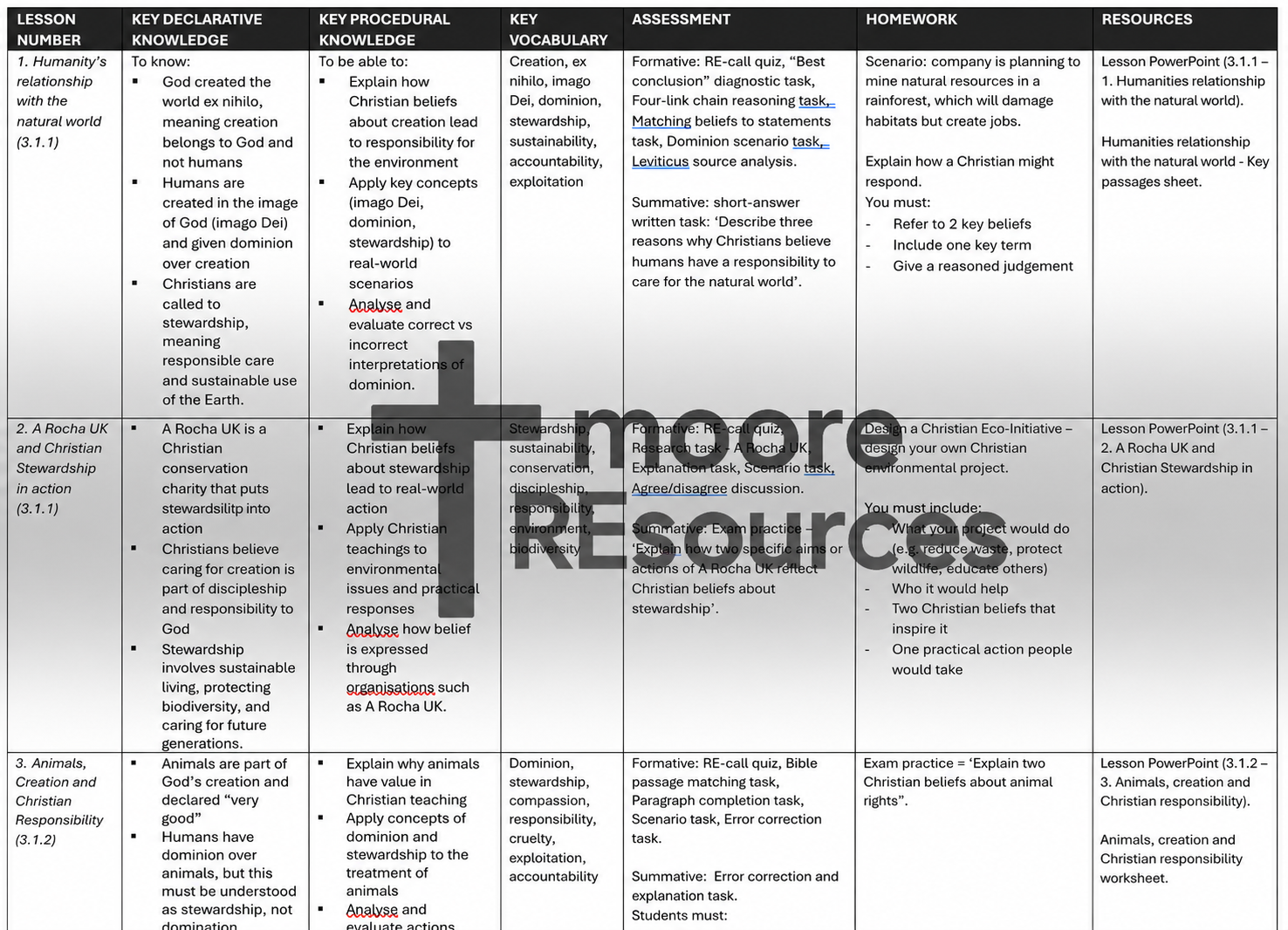
Explore Catholic teachings on creation, stewardship, and environmental responsibility with this engaging and fully resourced lesson pack for 3.1.1 Humanity's Relationship with the Natural World – Catholic Perspectives. Carefully aligned to the WJEC Religious Studies 2025 specification, these lessons enable learners to investigate why Catholics believe humanity has a God-given duty to care for creation and how these beliefs are put into action today.
Learners Will Understand:
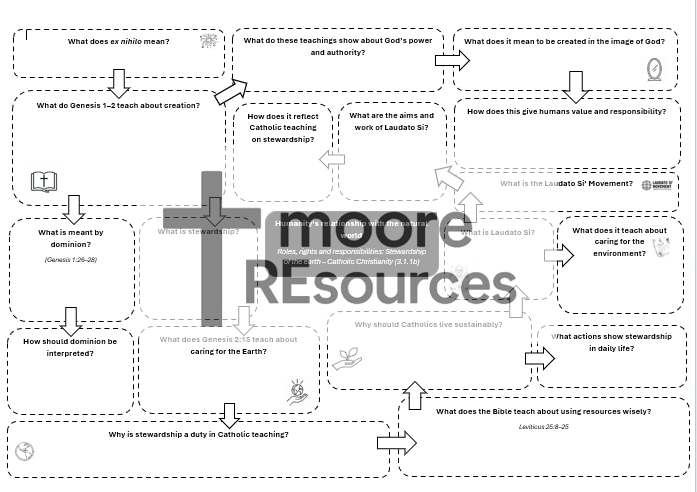
Catholic beliefs about God as Creator and the doctrine of creation ex nihilo.
The importance of humanity being created in the image of God.
The concepts of dominion and stewardship, and the responsibility to care for creation.
Biblical teachings including Genesis 1–2 and Leviticus 25, and how these support sustainable use of resources.
Catholic teachings on environmental responsibility and care for our common home.
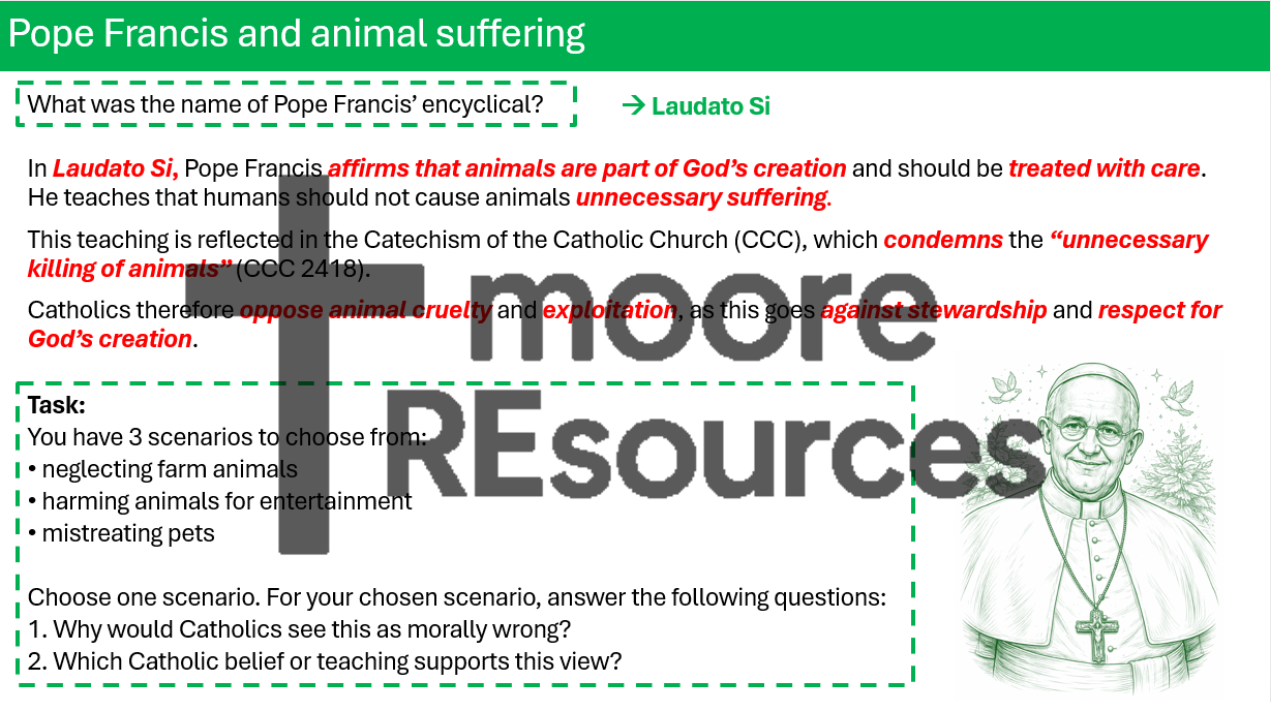
The significance of Pope Francis' encyclical Laudato Si' and its call to hear both "the cry of the earth and the cry of the poor".
How Catholic organisations and movements put stewardship into action in practical ways.
How Catholic beliefs influence attitudes towards climate change, conservation, and the use of natural resources.
Suitable for:
WJEC GCSE Religious Studies (from 2025)
KS4 RE and Ethics courses
Revision and intervention sessions
Independent study and enrichment
Explore Catholic teachings on creation, stewardship, and environmental responsibility with this engaging and fully resourced lesson pack for 3.1.1 Humanity's Relationship with the Natural World – Catholic Perspectives. Carefully aligned to the WJEC Religious Studies 2025 specification, these lessons enable learners to investigate why Catholics believe humanity has a God-given duty to care for creation and how these beliefs are put into action today.
Learners Will Understand:
Catholic beliefs about God as Creator and the doctrine of creation ex nihilo.
The importance of humanity being created in the image of God.
The concepts of dominion and stewardship, and the responsibility to care for creation.
Biblical teachings including Genesis 1–2 and Leviticus 25, and how these support sustainable use of resources.
Catholic teachings on environmental responsibility and care for our common home.
The significance of Pope Francis' encyclical Laudato Si' and its call to hear both "the cry of the earth and the cry of the poor".
How Catholic organisations and movements put stewardship into action in practical ways.
How Catholic beliefs influence attitudes towards climate change, conservation, and the use of natural resources.
Suitable for:
WJEC GCSE Religious Studies (from 2025)
KS4 RE and Ethics courses
Revision and intervention sessions
Independent study and enrichment

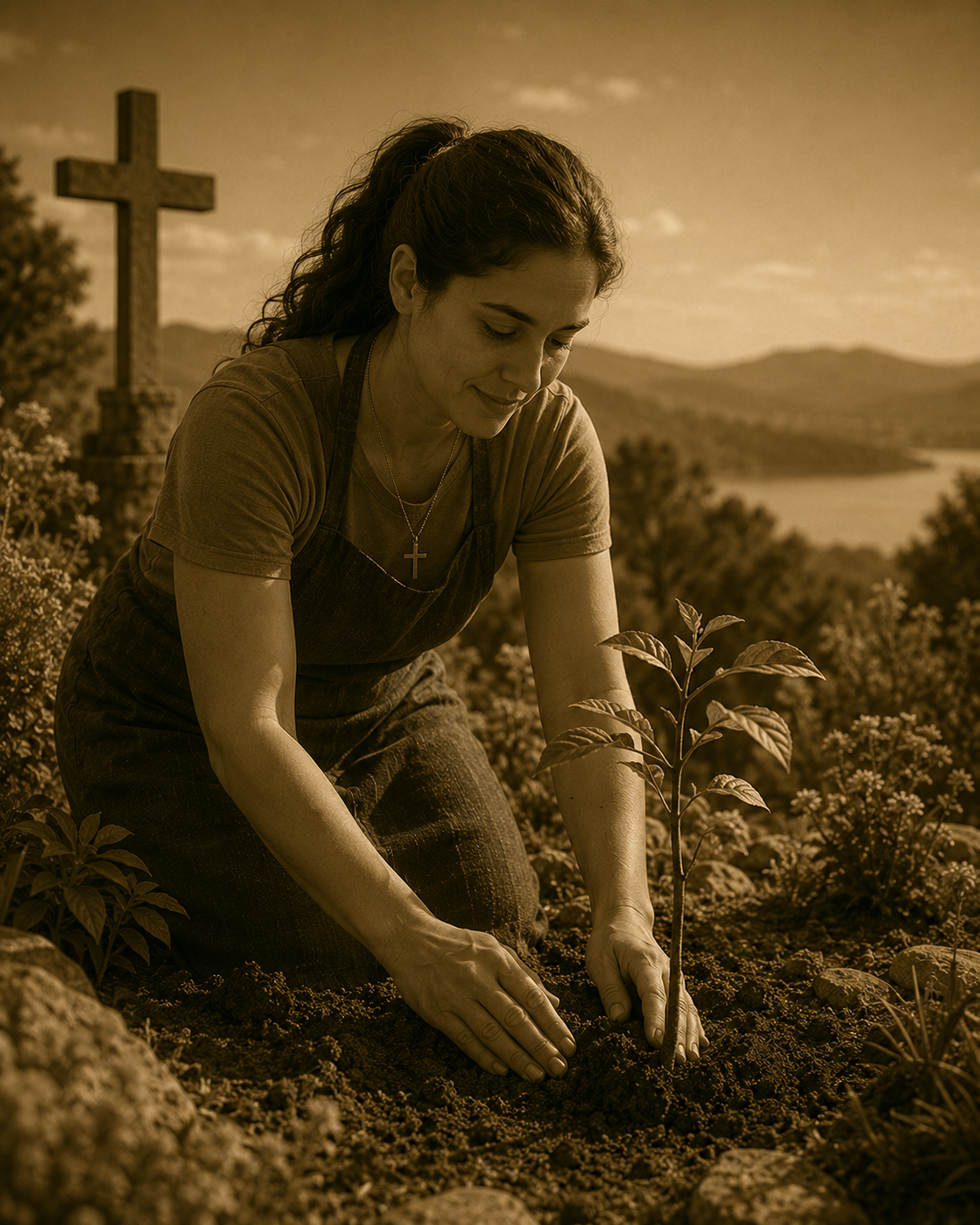 Image 1 of 7
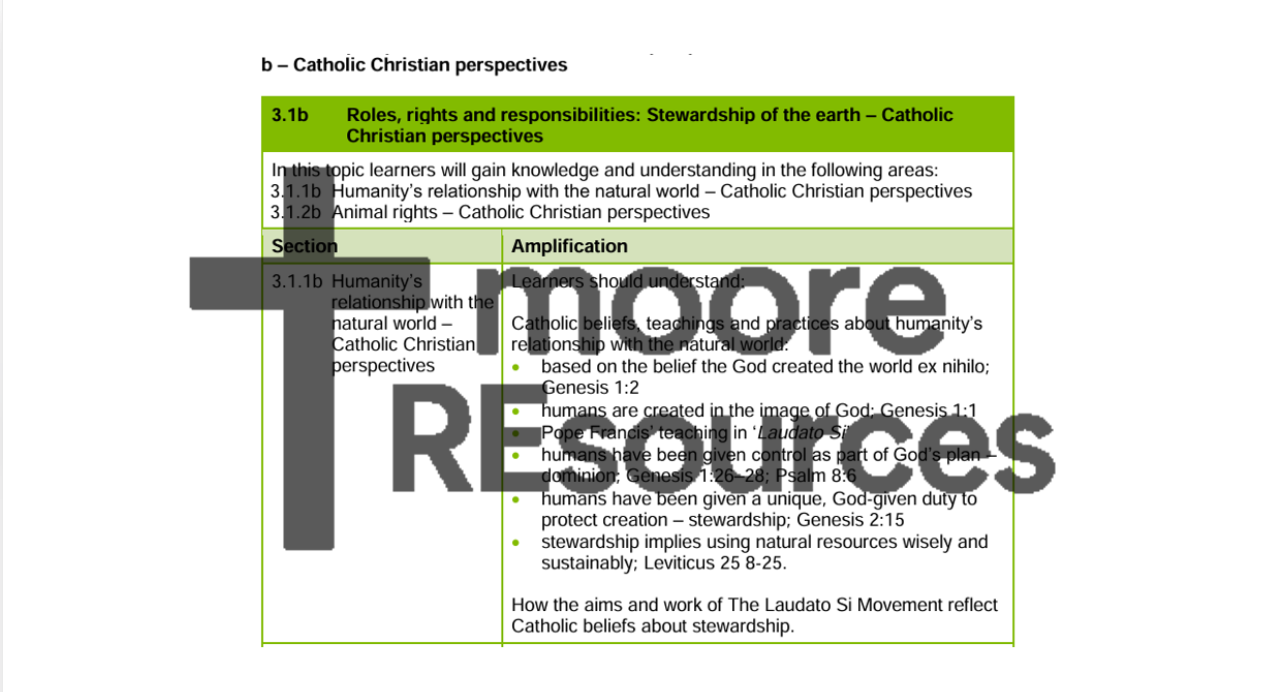 Image 2 of 7
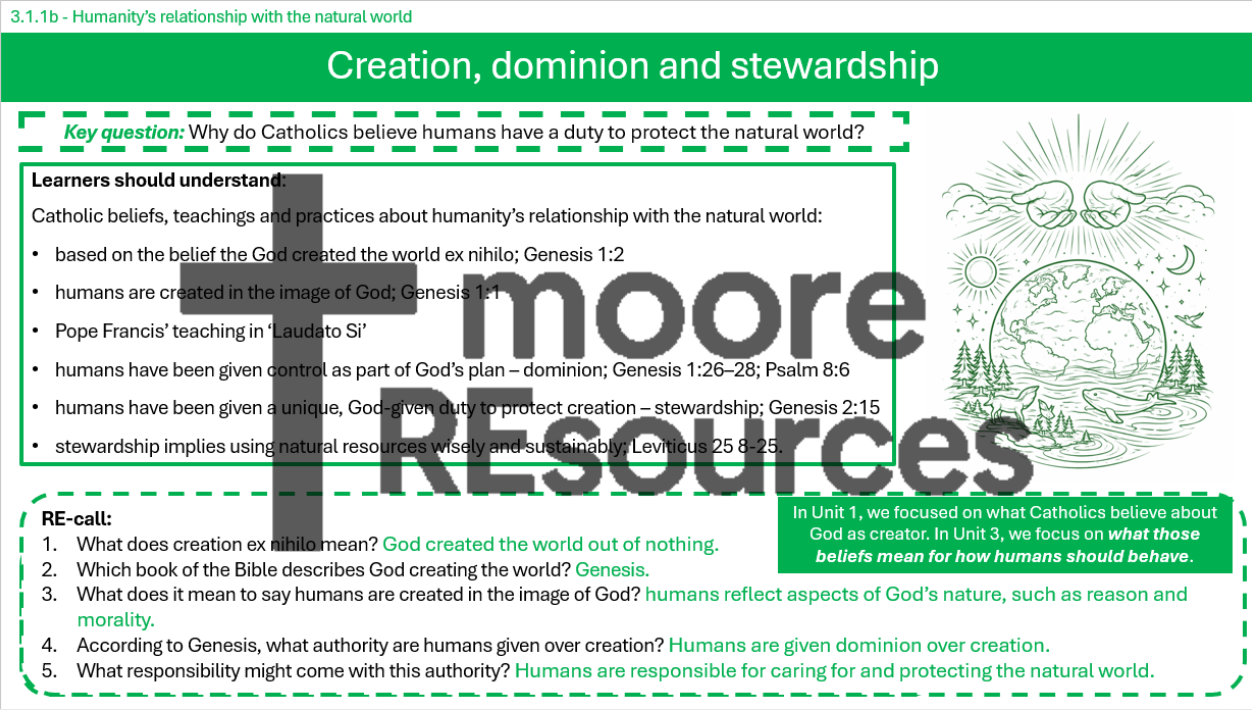 Image 3 of 7
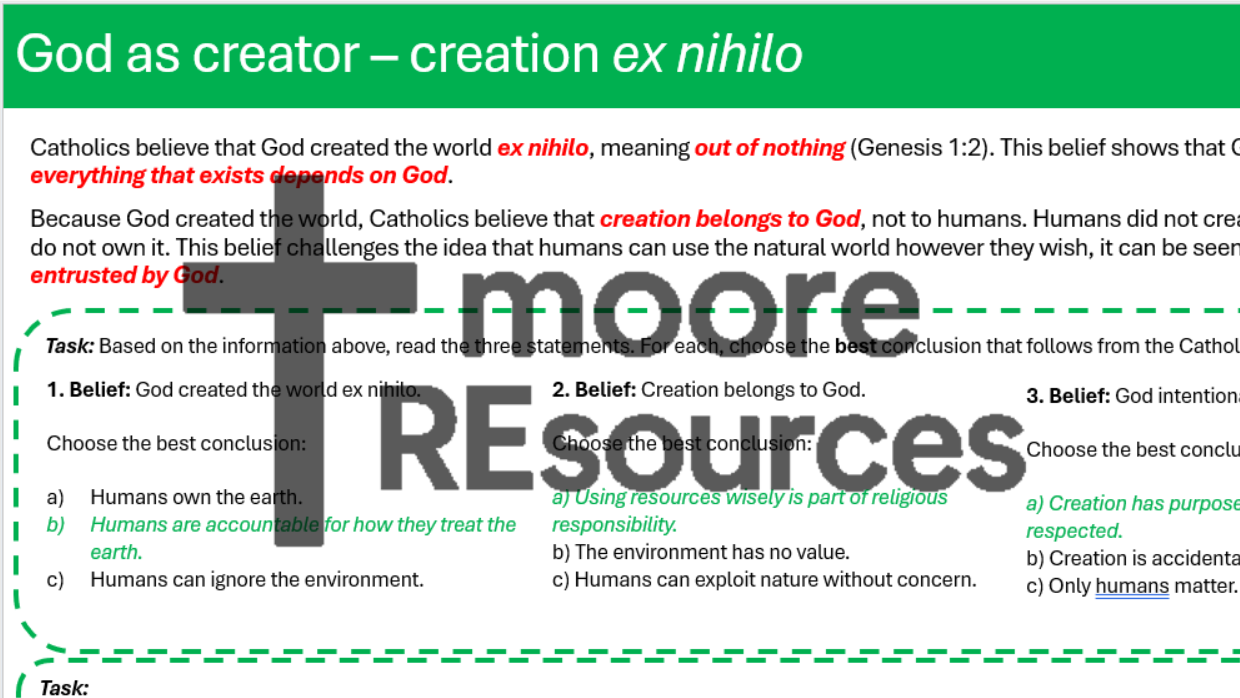 Image 4 of 7
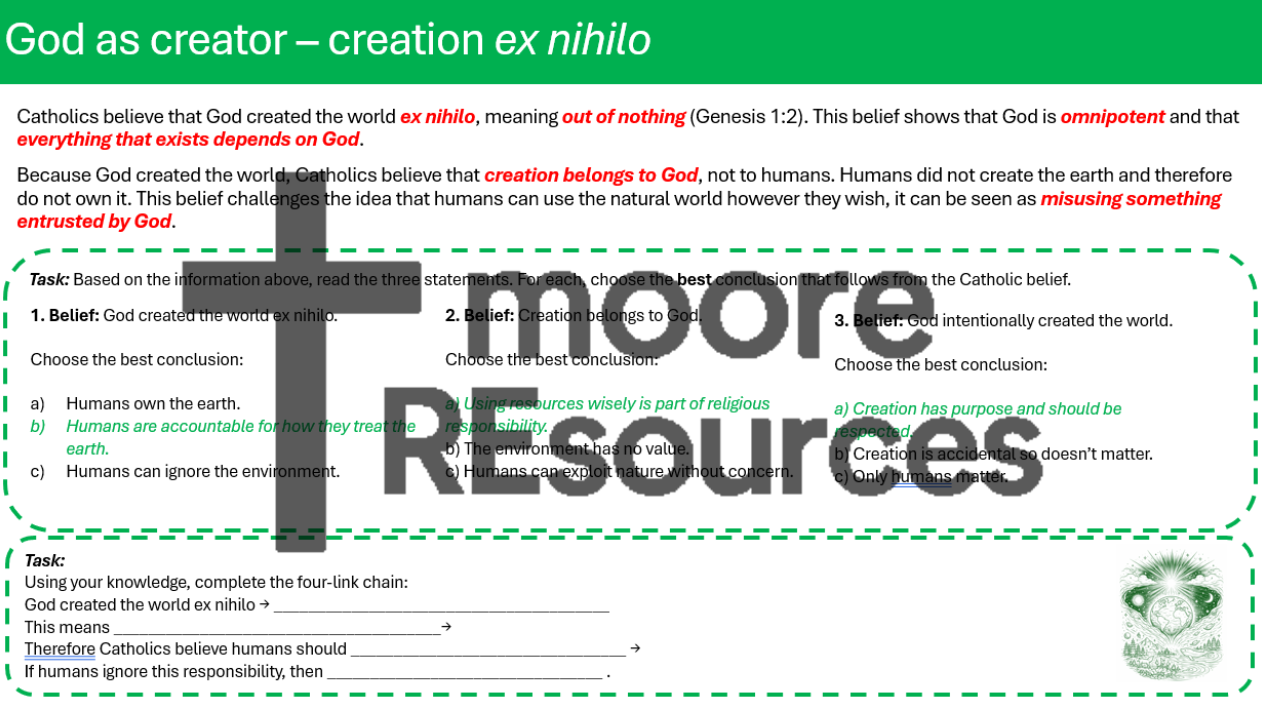 Image 5 of 7
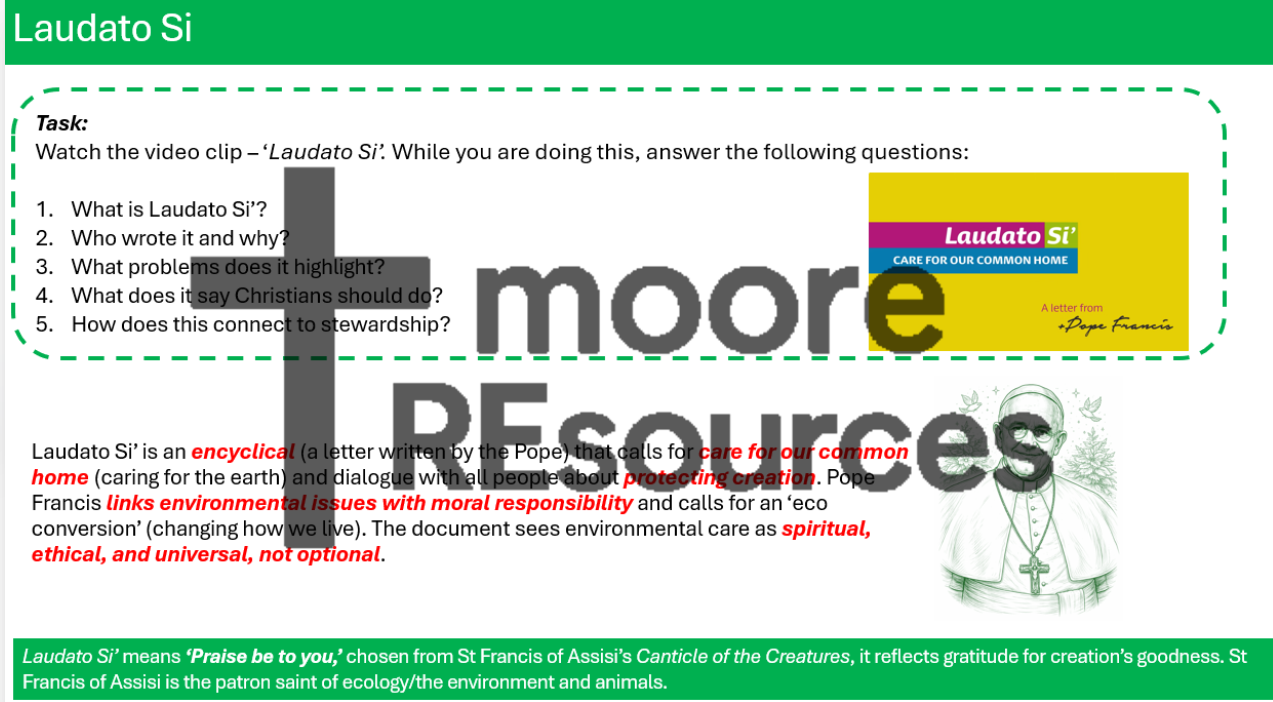 Image 6 of 7
 Image 7 of 7