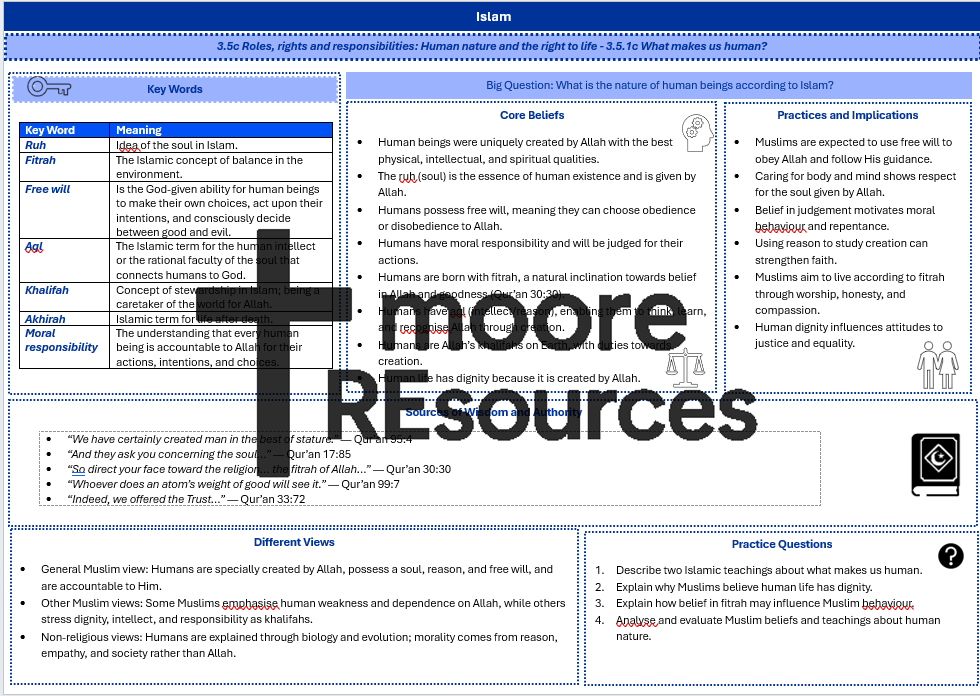
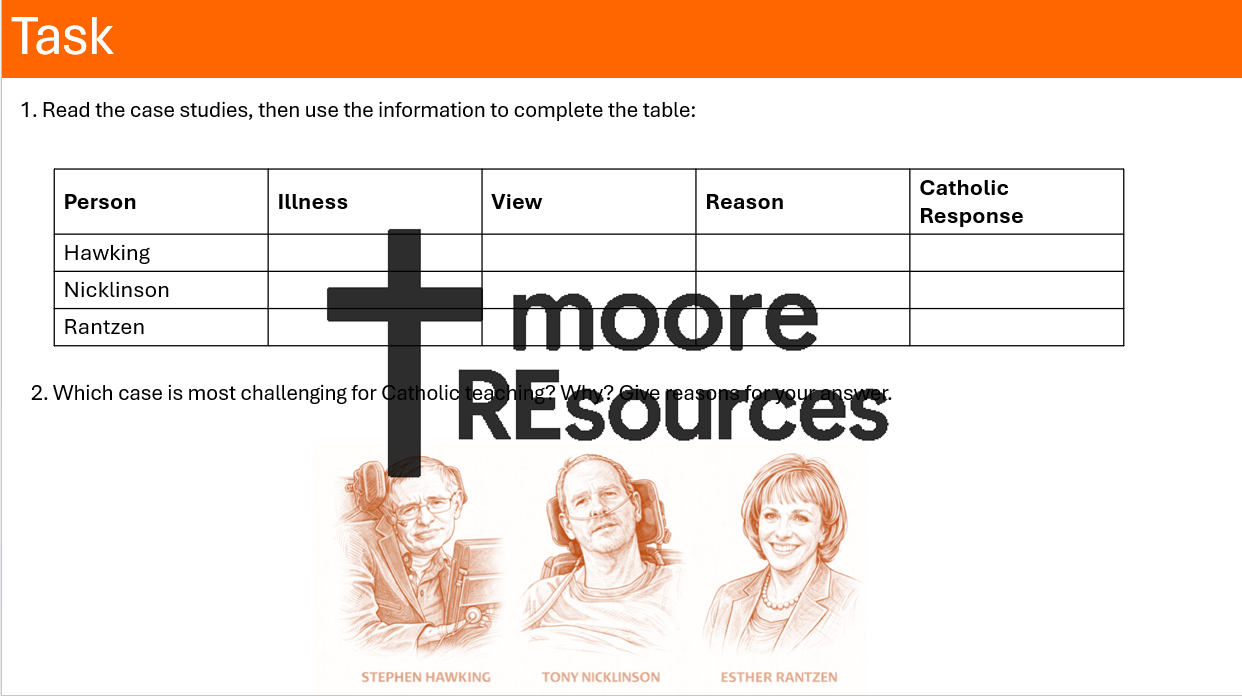
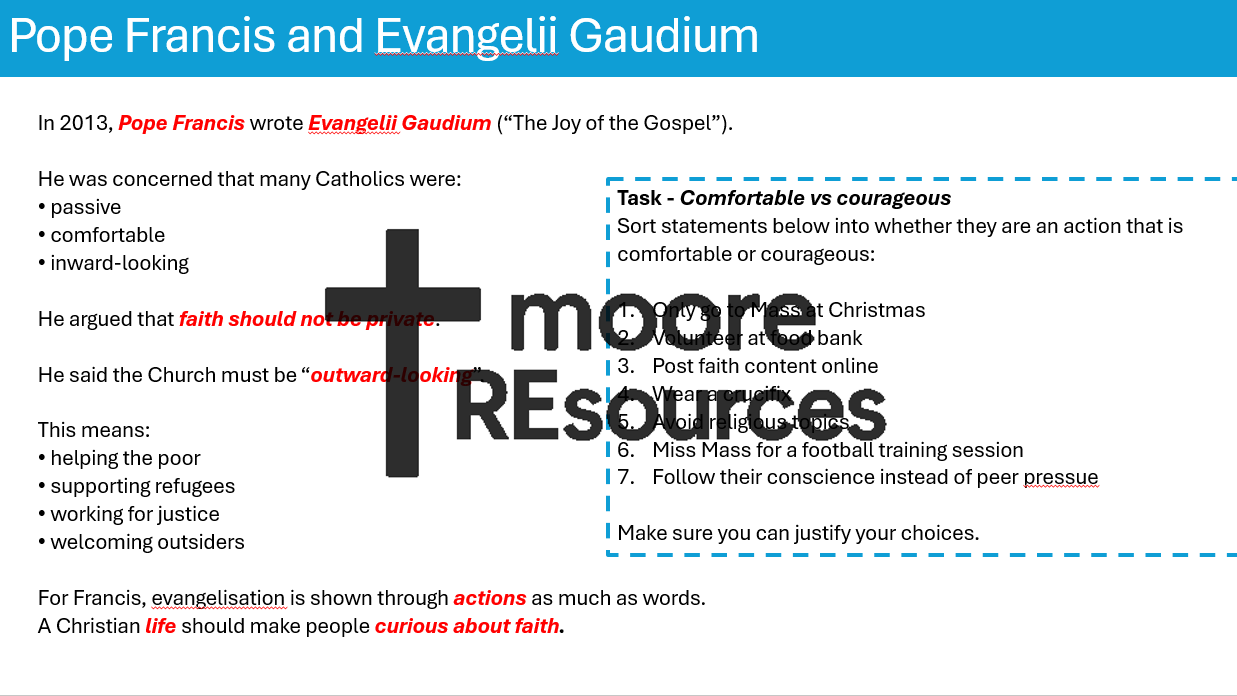
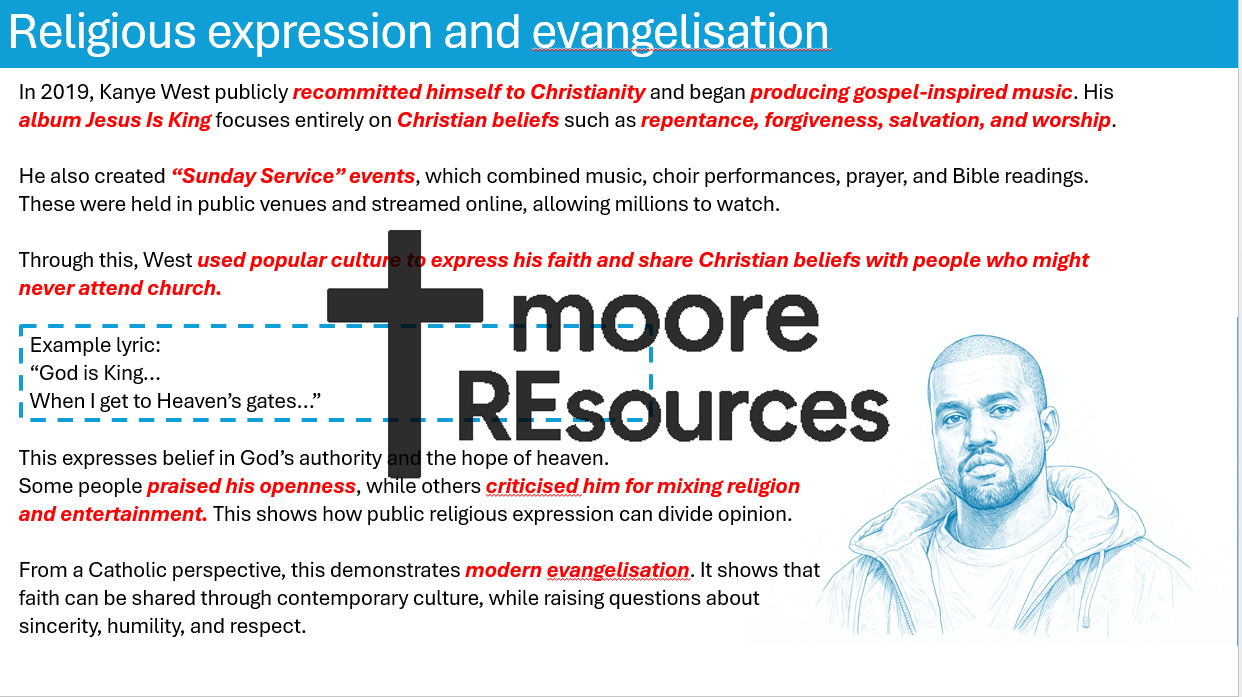
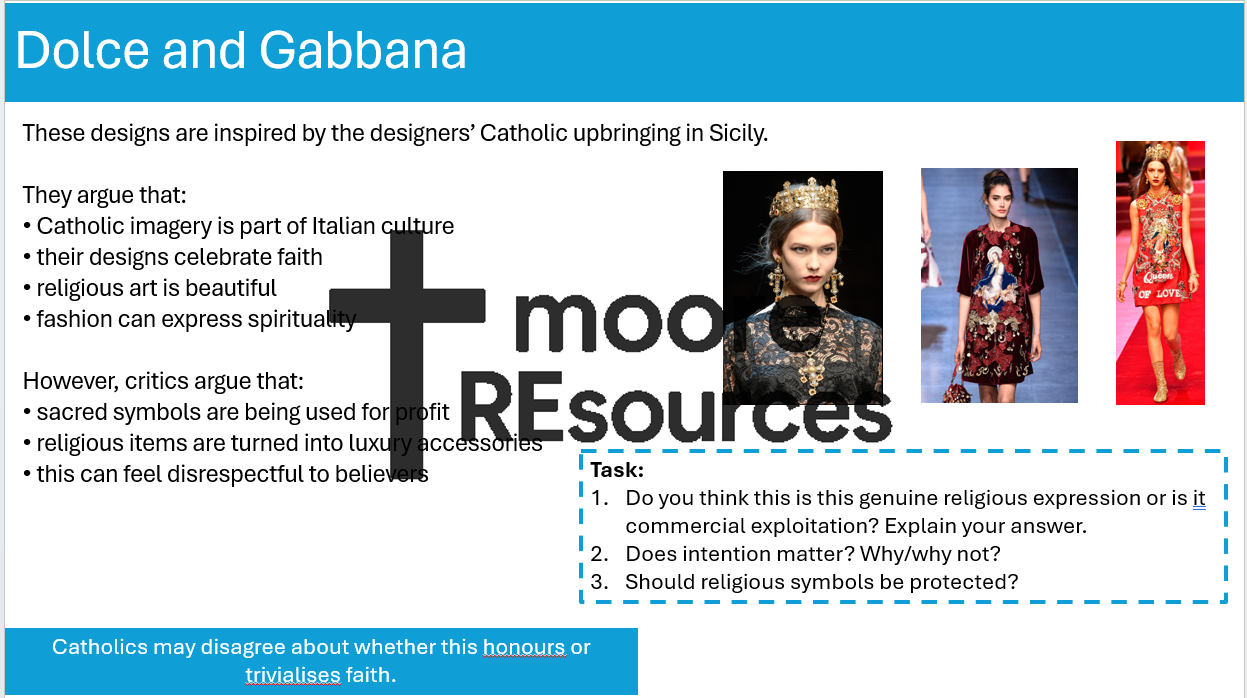
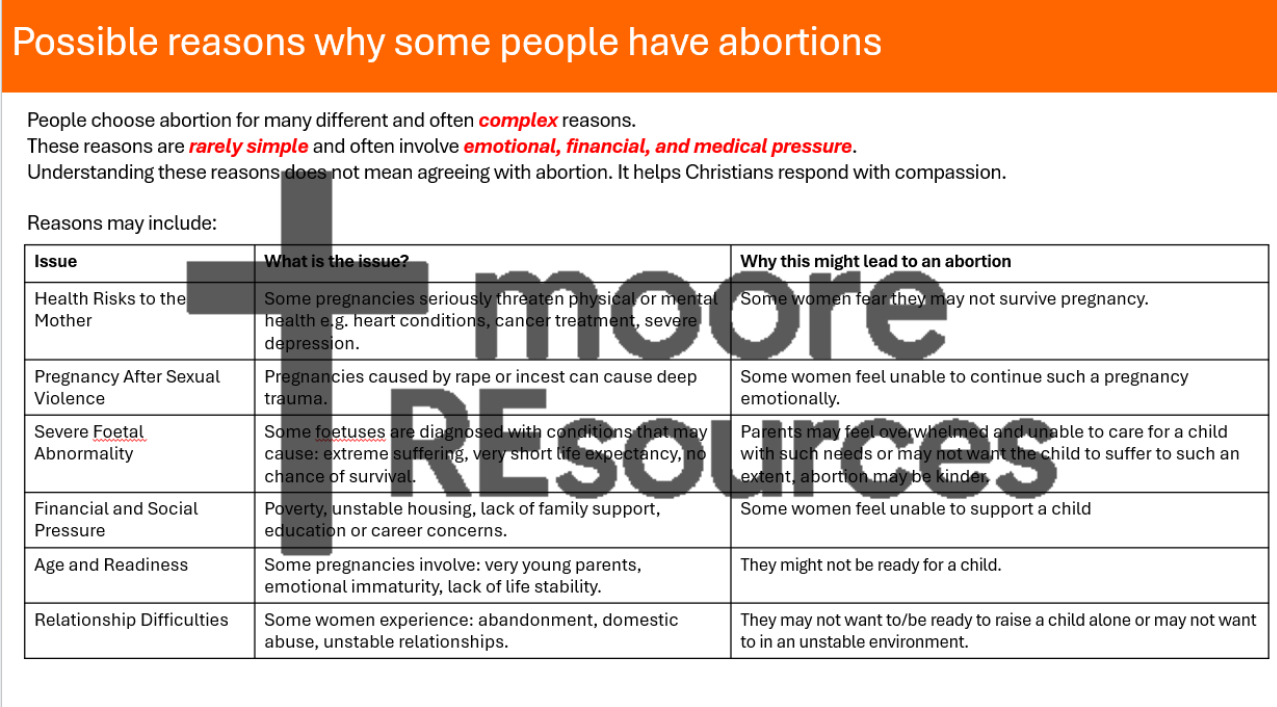
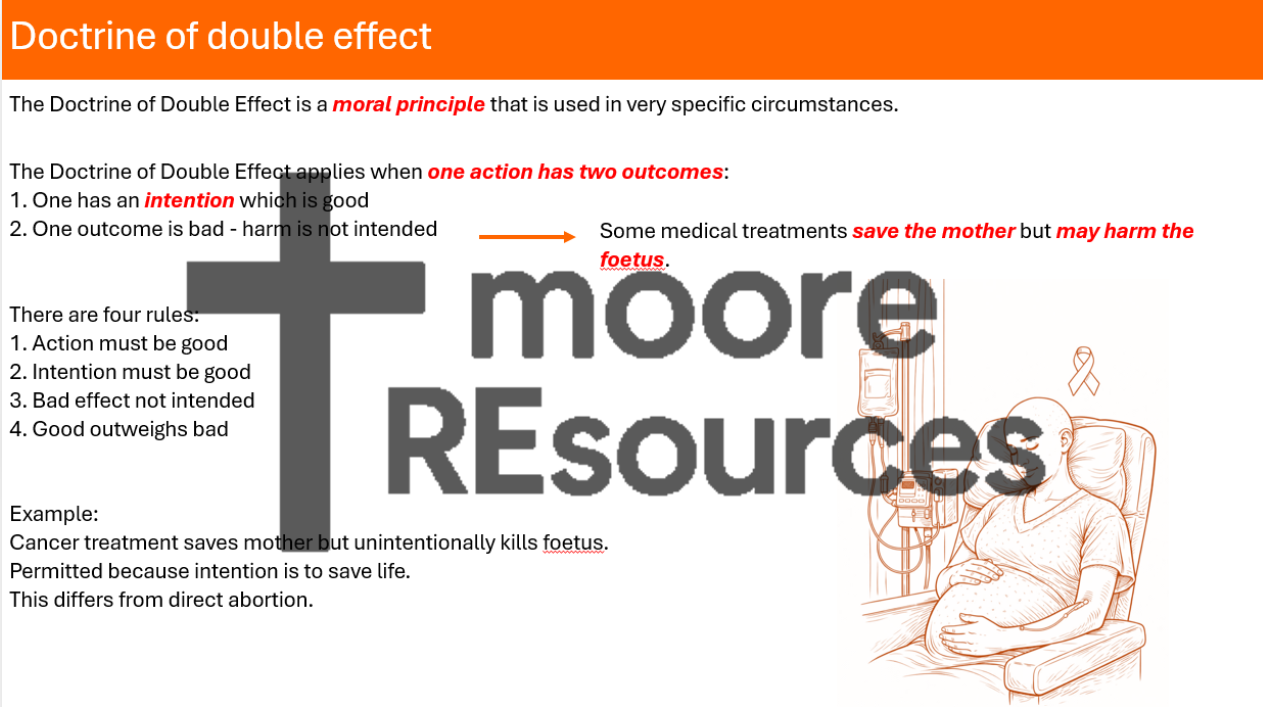
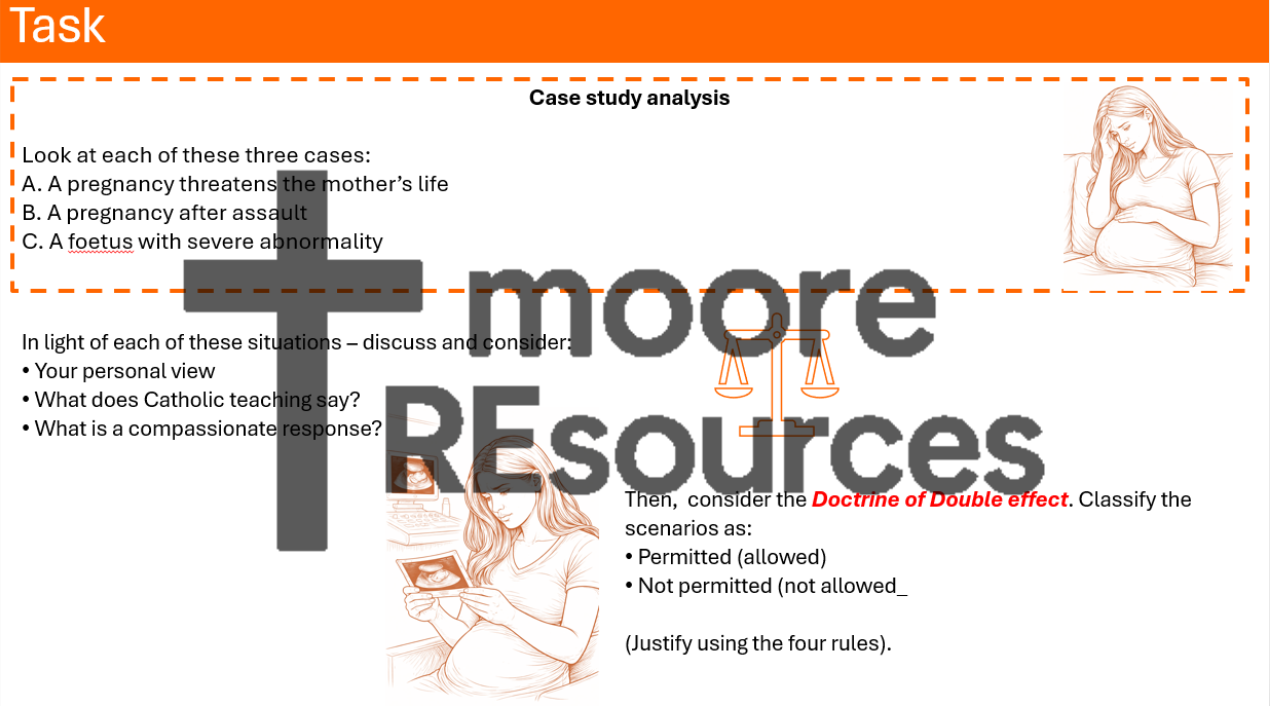
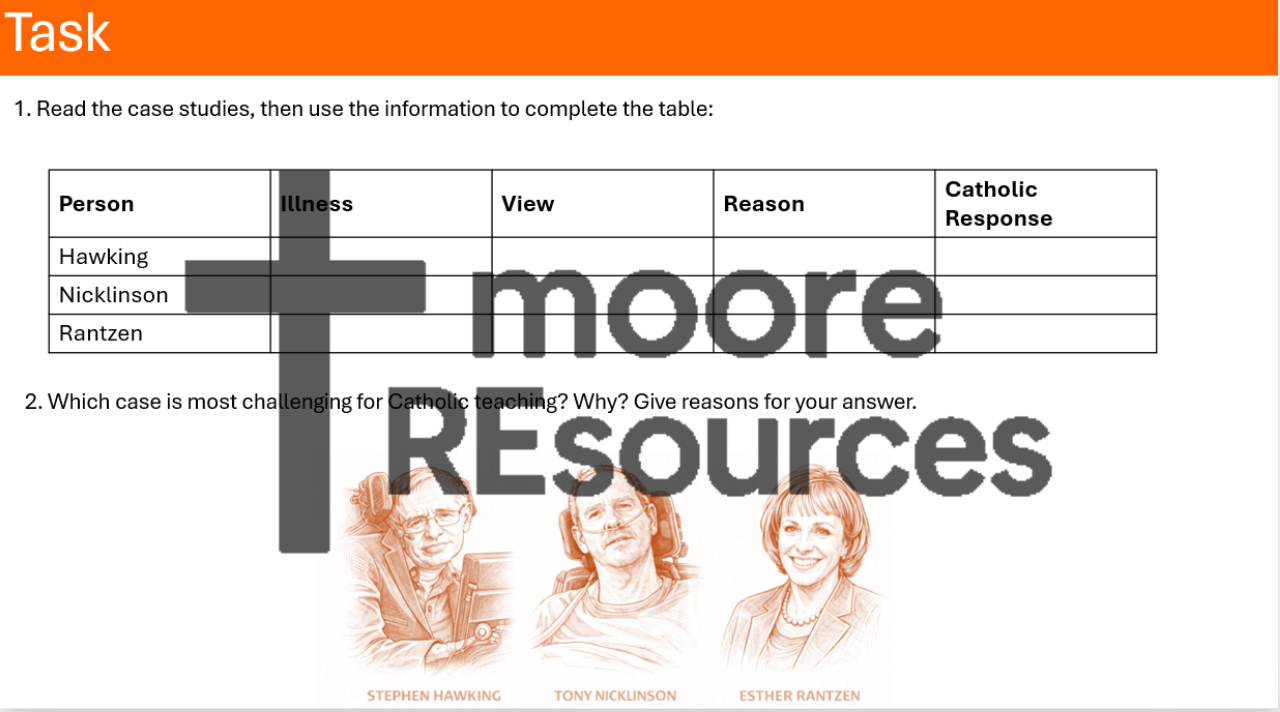
Explore Catholic beliefs about what it means to be human with this engaging and fully resourced lesson pack for 3.2.1 What Makes Us Human? – Catholic Perspectives. Carefully aligned to the WJEC Religious Studies 2025 specification, these lessons enable learners to investigate Catholic teachings on human nature, dignity, free will, and the purpose of life. Learners will consider why Catholics believe every person has unique value and how these beliefs influence moral decision-making.
Learners Will Understand:
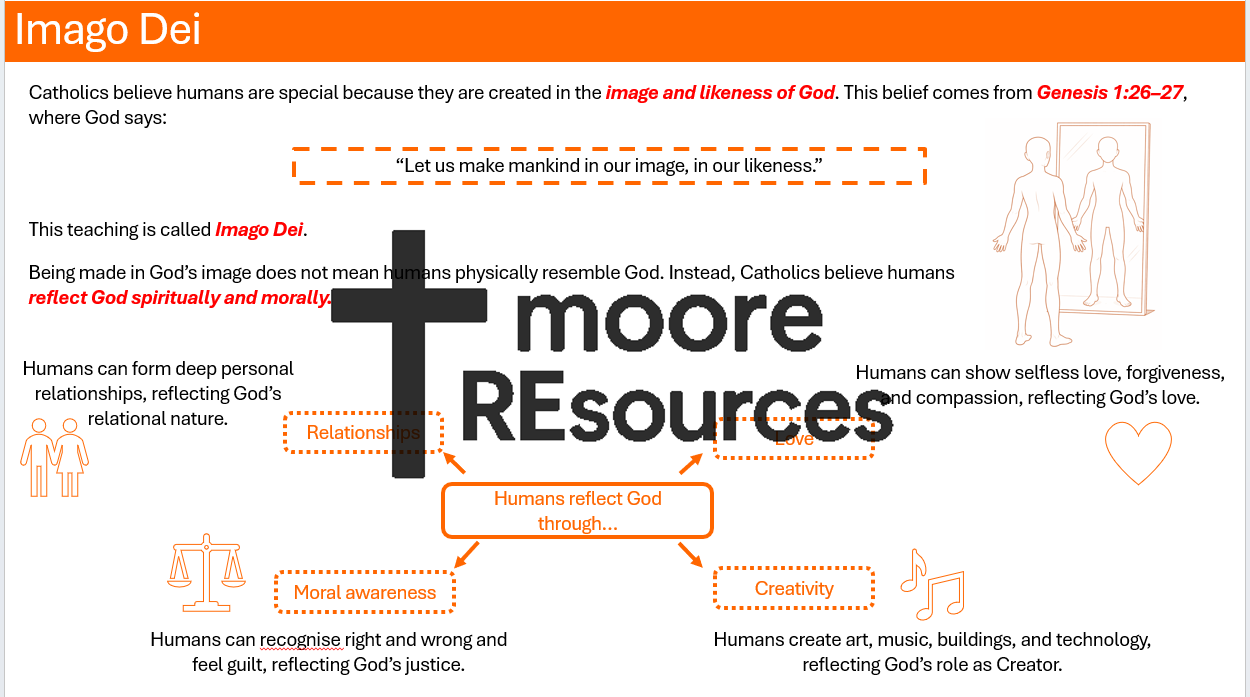
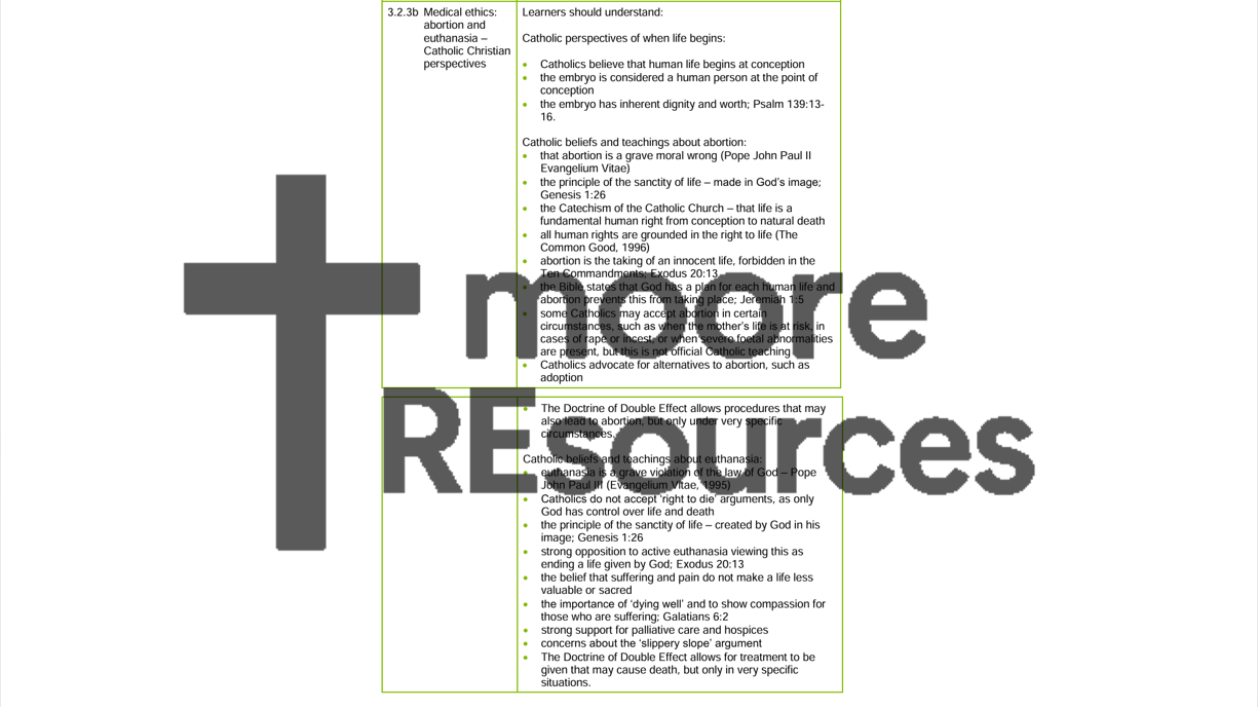
Catholic beliefs about being created in the image and likeness of God (imago Dei).
The nature and purpose of the soul and what distinguishes humans from the rest of creation.
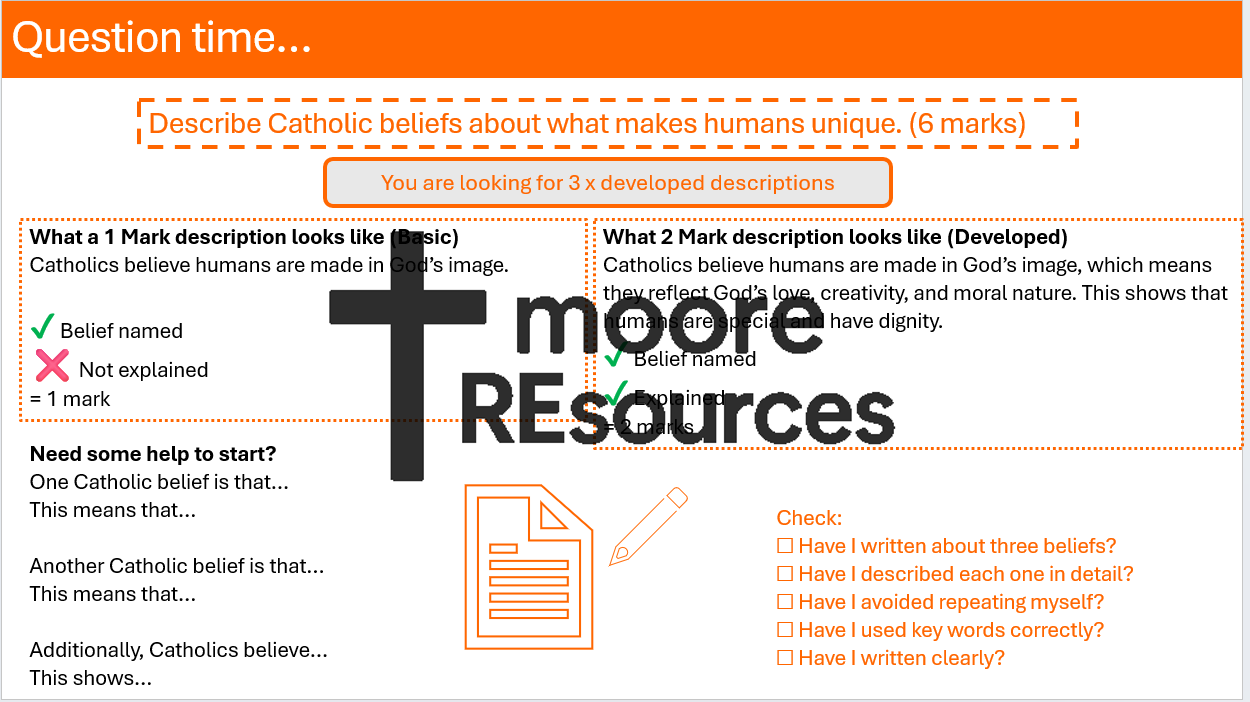
The importance of free will, conscience, and moral responsibility.
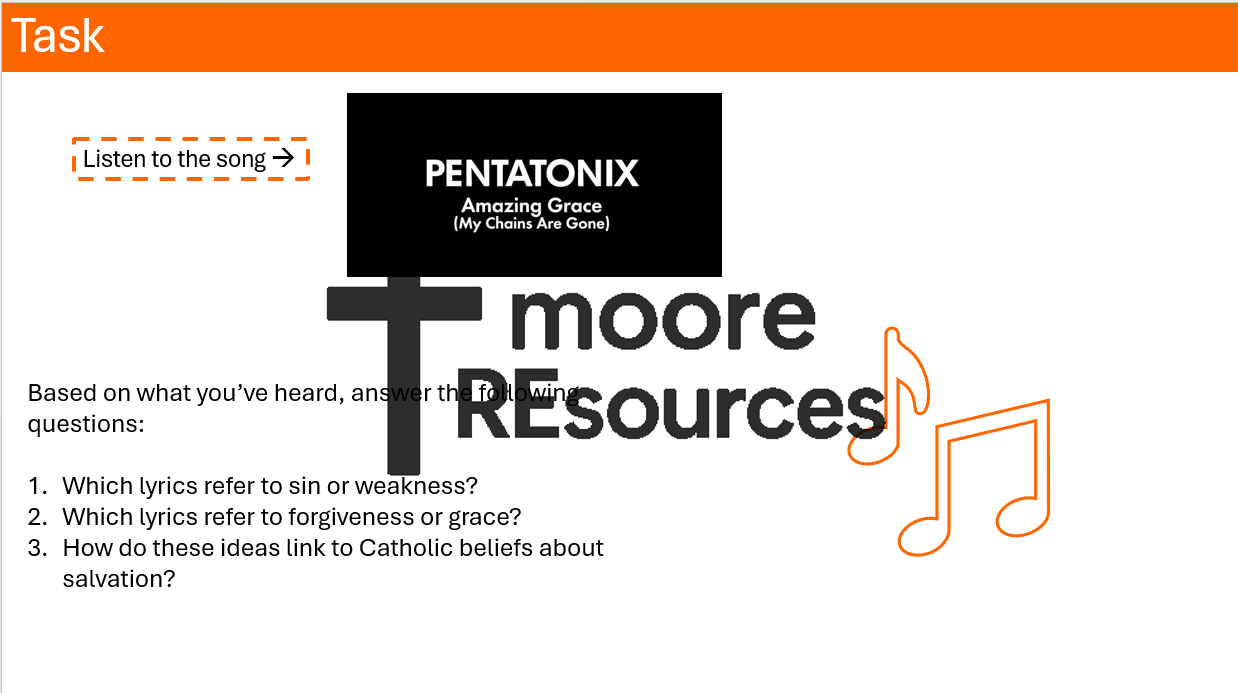
Catholic teachings on the fallen nature of humanity and the need for salvation.
The relationship between humanity and God, and the call to holiness.
The role of reason and virtue in guiding human behaviour, including the influence of St Thomas Aquinas and Natural Law.
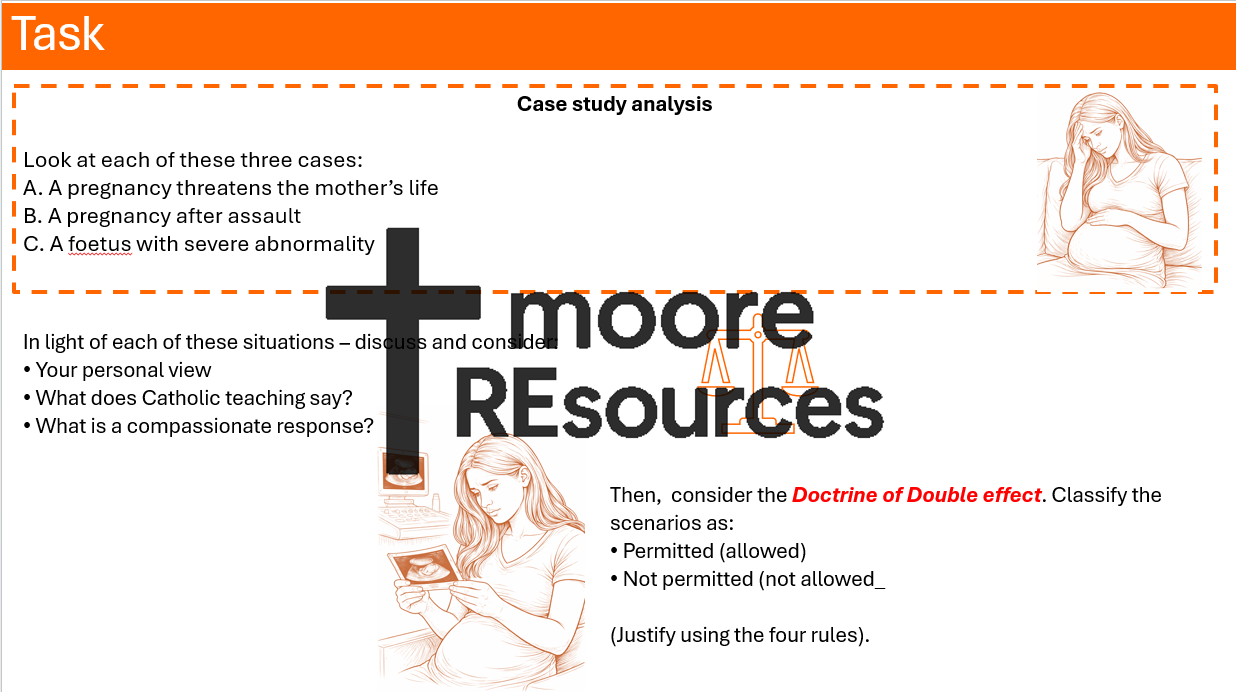
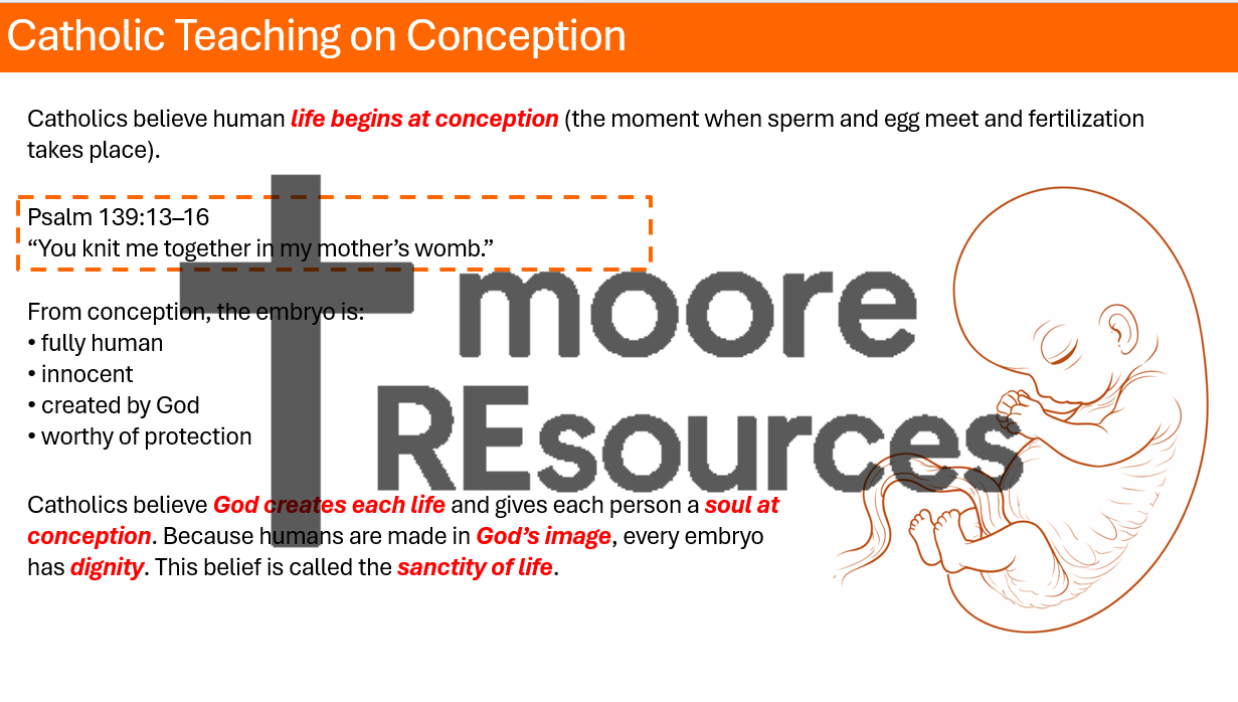
The significance of human dignity and why every human life has inherent value.
How Catholic beliefs about human nature influence attitudes towards identity, relationships, and moral choices.
Contemporary issues surrounding what it means to be human in the modern world.
Suitable for:
WJEC GCSE Religious Studies (from 2025)
KS4 RE and Ethics courses
Revision and intervention sessions
Independent study and enrichment
Explore Catholic beliefs about what it means to be human with this engaging and fully resourced lesson pack for 3.2.1 What Makes Us Human? – Catholic Perspectives. Carefully aligned to the WJEC Religious Studies 2025 specification, these lessons enable learners to investigate Catholic teachings on human nature, dignity, free will, and the purpose of life. Learners will consider why Catholics believe every person has unique value and how these beliefs influence moral decision-making.
Learners Will Understand:
Catholic beliefs about being created in the image and likeness of God (imago Dei).
The nature and purpose of the soul and what distinguishes humans from the rest of creation.
The importance of free will, conscience, and moral responsibility.
Catholic teachings on the fallen nature of humanity and the need for salvation.
The relationship between humanity and God, and the call to holiness.
The role of reason and virtue in guiding human behaviour, including the influence of St Thomas Aquinas and Natural Law.
The significance of human dignity and why every human life has inherent value.
How Catholic beliefs about human nature influence attitudes towards identity, relationships, and moral choices.
Contemporary issues surrounding what it means to be human in the modern world.
Suitable for:
WJEC GCSE Religious Studies (from 2025)
KS4 RE and Ethics courses
Revision and intervention sessions
Independent study and enrichment

 Image 1 of 7
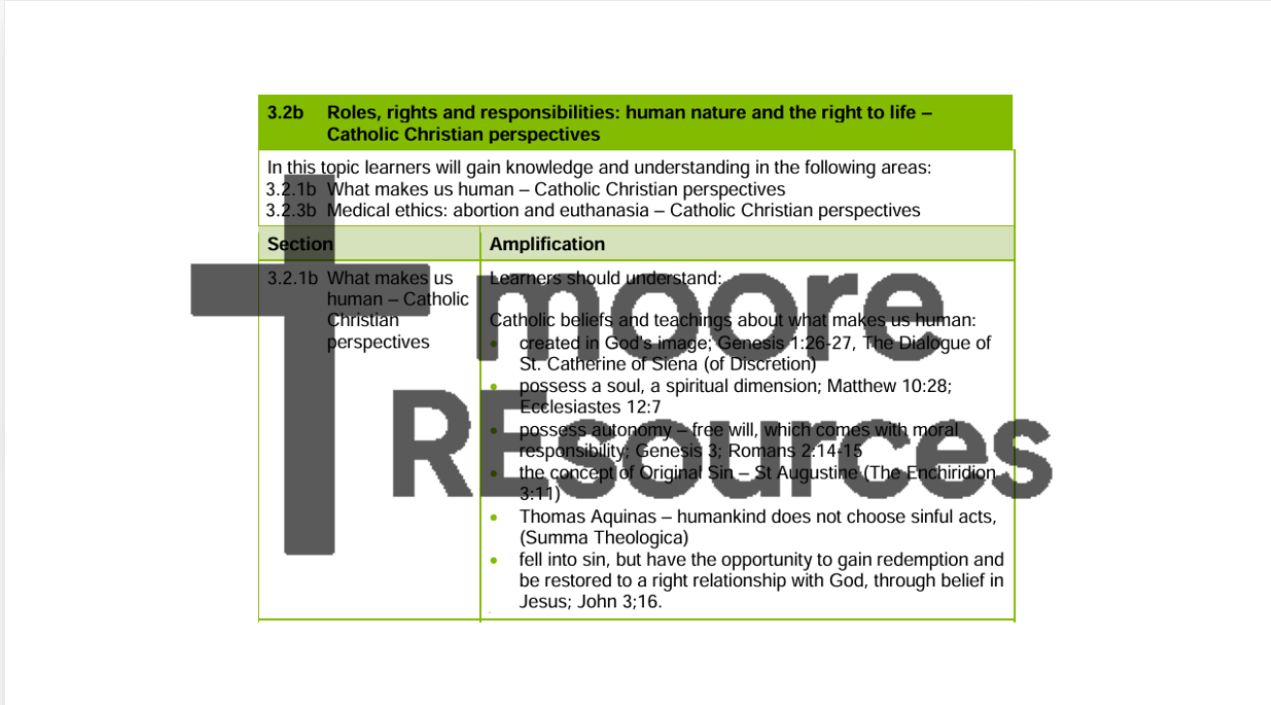 Image 2 of 7
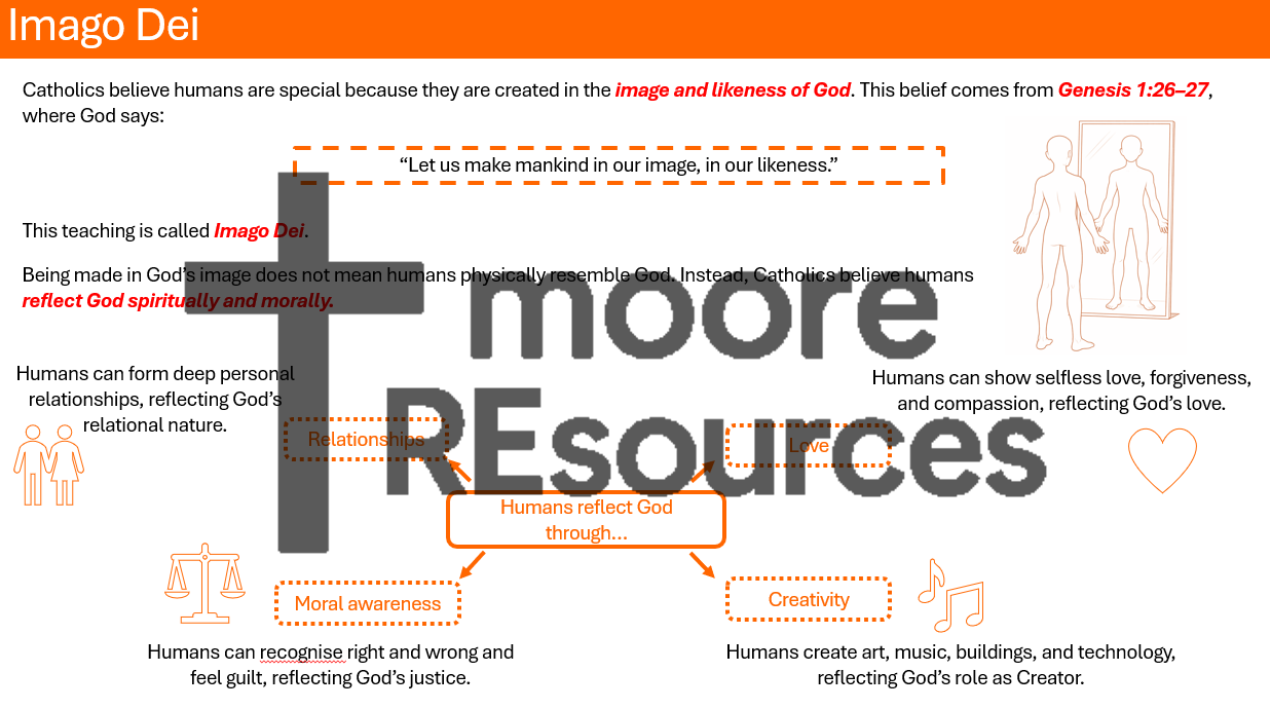 Image 3 of 7
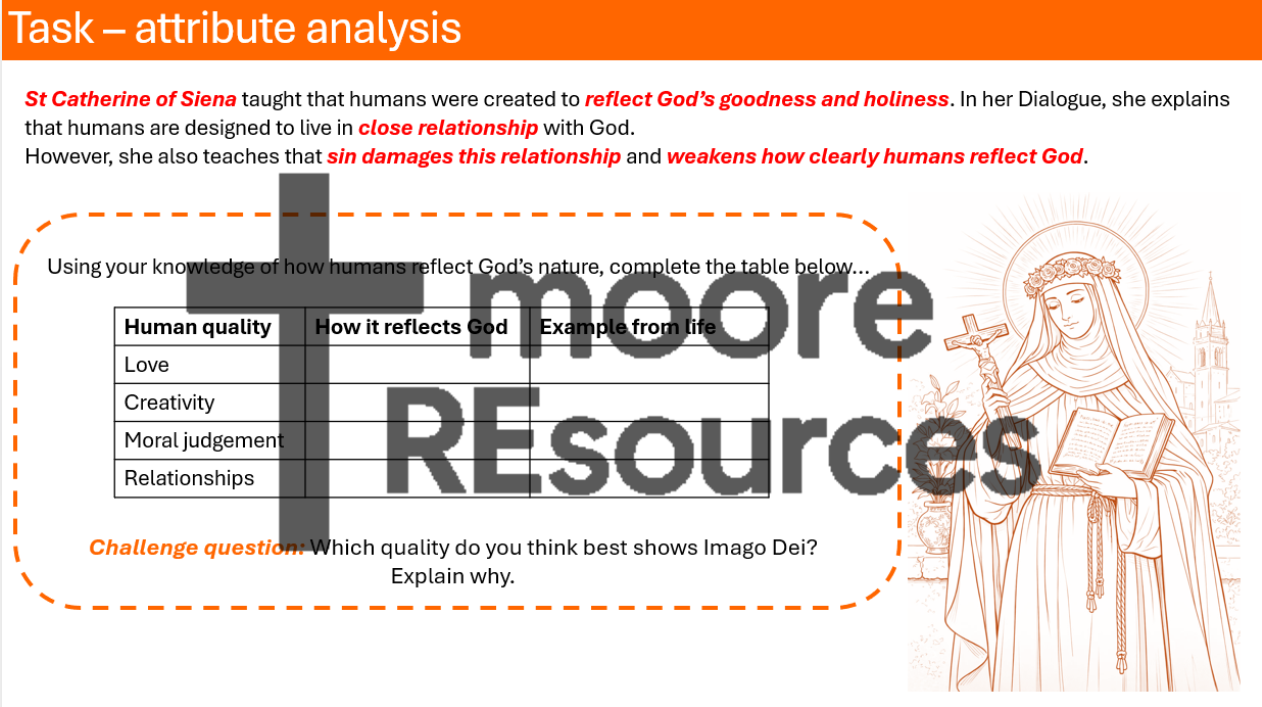 Image 4 of 7
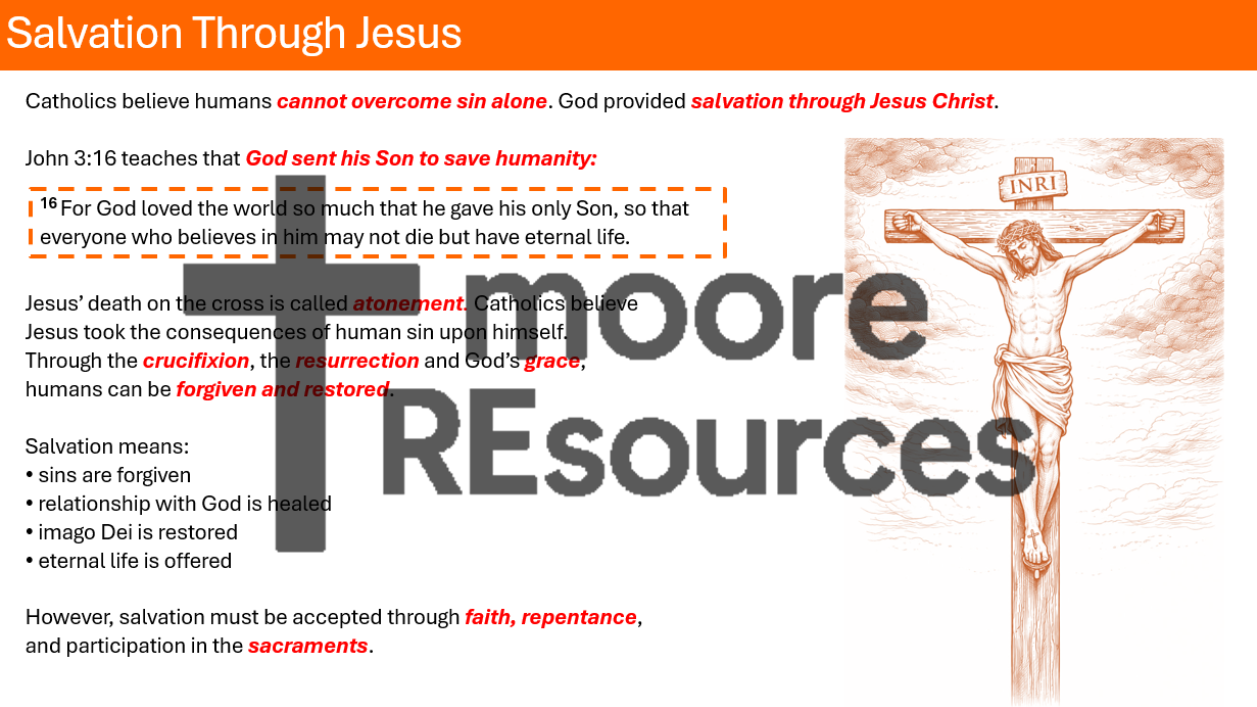 Image 5 of 7
 Image 6 of 7
 Image 7 of 7